
The summer-pasture road: how livestock moves in Neuquén
Every year, families of crianceros (livestock herders) move their animals between the mountains and the lowlands. If you drive through the area, it helps to know how it works.

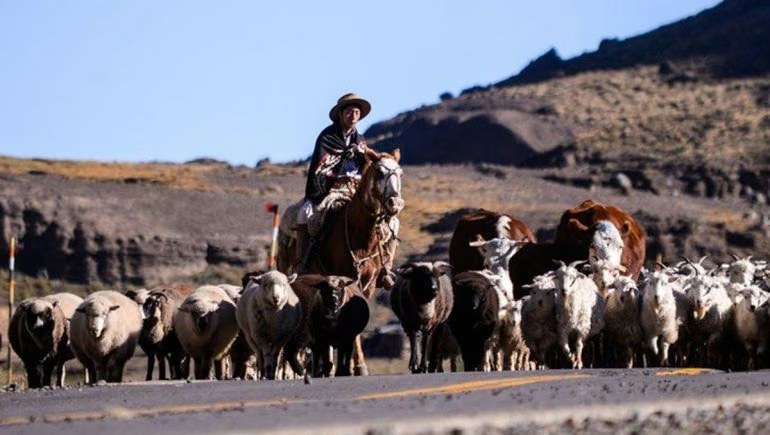
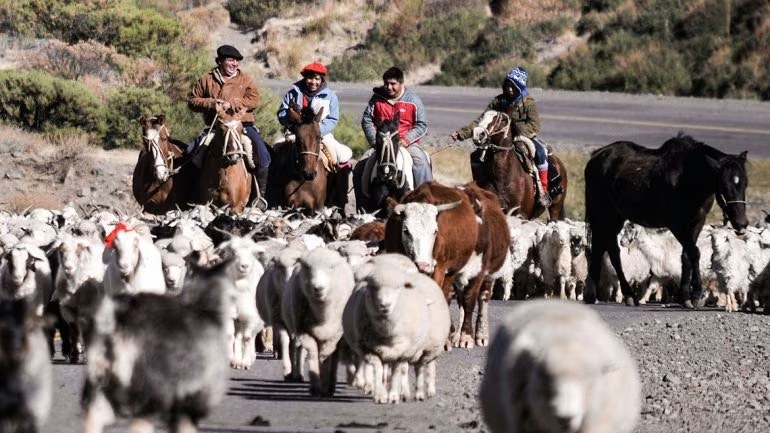
Crianceros during the seasonal drive in Neuquén.
What transhumance is
Transhumance is a traditional practice of inland Neuquén. The crianceros move their animals to find better pasture. The article describes it as a way of life and part of the province's intangible heritage.
Winter pasture and summer pasture
In winter, the animals graze in the lowlands of central Neuquén. In summer they go up to the mountains, where tender vegetation grows on the slopes of the Andes. That period is called the veranada. The groups of driven animals are called piños.
The return trip
In April and May they make the long drives from the mountains down to the lowlands, together with their families. Each drive can last between two weeks and a month.
Where and how the road is looked after
The operation covers provincial route 43, in the north, and routes 13, 23 and 26, in the center of the province. It includes towns such as Villa Pehuenia, Caviahue-Copahue, Loncopué, Chos Malal, Manzano Amargo and Andacollo. Road Safety accompanies the crianceros with three vehicles. Drivers are asked to take extreme care on those roads during the season.
A festival to get to know that culture
In November, Chos Malal hosts the Fiesta Nacional del Chivito, la Danza y la Canción, with traditional dances, music and regional food. It is the 18th edition and will be held from 20 to 22 November 2026, according to Noticias NQN (22 Jul 2026).
What we do not know
- The source gives no numbers of crianceros, animals or kilometers traveled.
- The article was published in 2022 and describes that year's operation: confirm with Neuquén Road Safety how it works today.
Keep reading
Sources
- Diario Río Negro: Postales inolvidables de la trashumancia por los caminos neuquinos (31 Mar 2022)
- Revisado el 9 Oct 2026